Legal Client Experience Report 2026
The Legal CX Report® is a study of 430+ practicing attorneys, law firm executives, and legal clients. t reveals Legal Services’ change paradox. and what separates firms that survive from those that thrive.

Executive Summary
Last year’s report found that the average firm is falling short of client expectations, not because attorneys don’t care, but because they’re relying on outdated tools to fight modern battles. That insight resonated across the industry.
This year, we wanted to push further. We set out to test a bold hypothesis: Today’s legal clients care more about how their firm treats them than the legal outcome the firm achieves for them. The data revealed a more nuanced story —one that will unsettle every firm that’s ever sacrificed client service for win rate.

The Outcome Illusion
Legal outcomes matter, but they are not the most reliable driver of client satisfaction.
The data shows that clients who focus most on legal results are often the least satisfied with those results. Meanwhile, clients who value how they are treated report stronger satisfaction and greater loyalty.
Why? Because outcomes are not always fully within a firm’s control. Case facts, timing, and circumstances can all affect the final result.
Client experience is different. It is something firms can actively shape through clear communication, proactive updates, reduced uncertainty, and emotional support.
The takeaway: Building better systems around client experience is one of the most dependable ways to improve how clients feel about your firm.
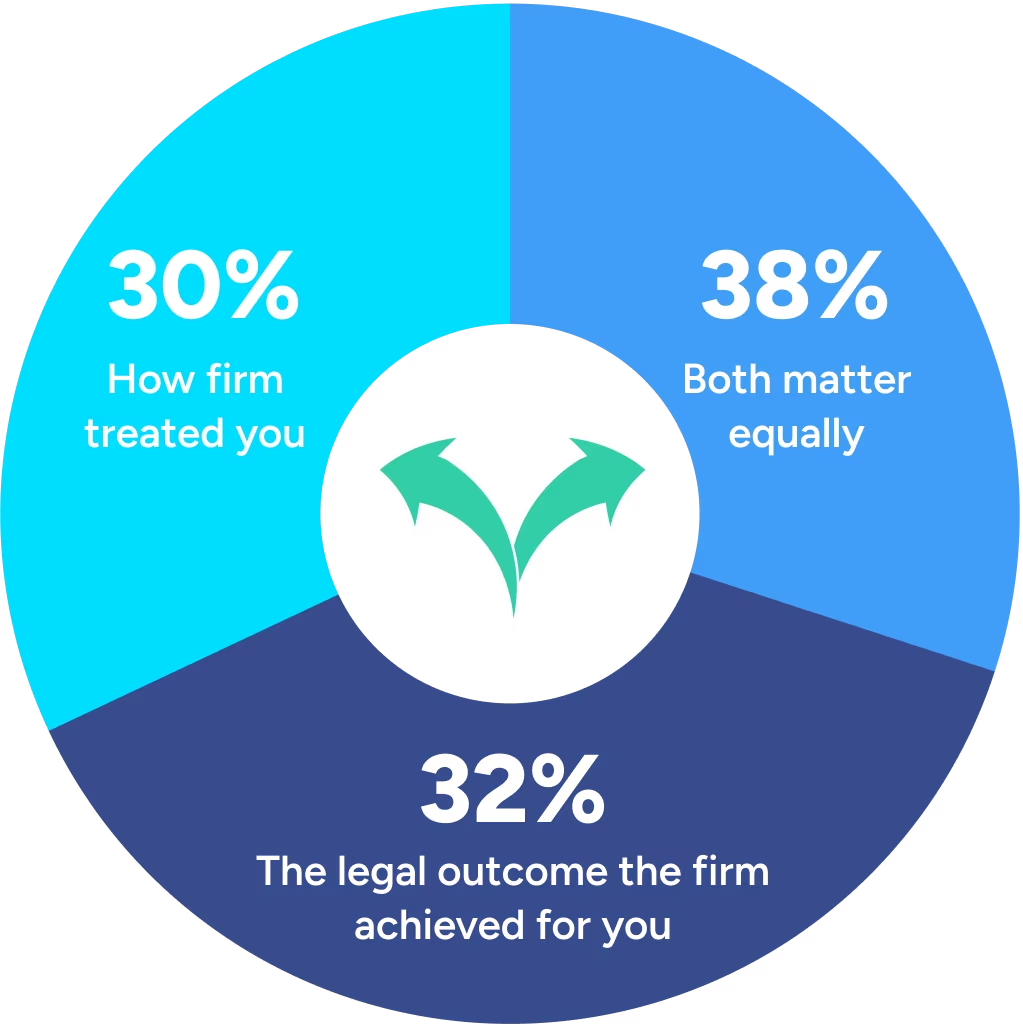
For decades, firms assumed strong legal results were enough to satisfy clients. But today’s clients weigh both outcome and experience.
They want a strong result, but they also want to feel informed, supported, and cared for throughout the process.
“Outcome-focused clients may also have higher-stakes cases: a personal injury matter or a workers comp case. When the outcome doesn’t go their way, it’s a big deal. It paints the entire experience in a negative light.”
.png)
Not only are experience-focused clients more satisfied as compared to the other groups, they’re also more likely to return to their law firm with future legal needs. This may be because they’re looking for things the firm controls: things like communication, responsiveness, and empathy. When they get it, they feel satisfied. Fortunately, great client service is achievable in every case. It’s a matter of aligning actions and operations with client expectations.

The Silent Majority Problem
In an on-demand world where reputation and recommendations rule, firms must be competent and emotionally connected in order to scale growth. Most firms are creating more quiet clients than vocal advocates. While 3 in 4 clients say they are highly satisfied, only 41% would recommend their legal team and just 29% would leave a positive review.
Good service may satisfy clients, but genuine care is what motivates them to speak up. In legal services, where matters are often stressful and personal, clients advocate when they feel informed, supported, and truly cared for.
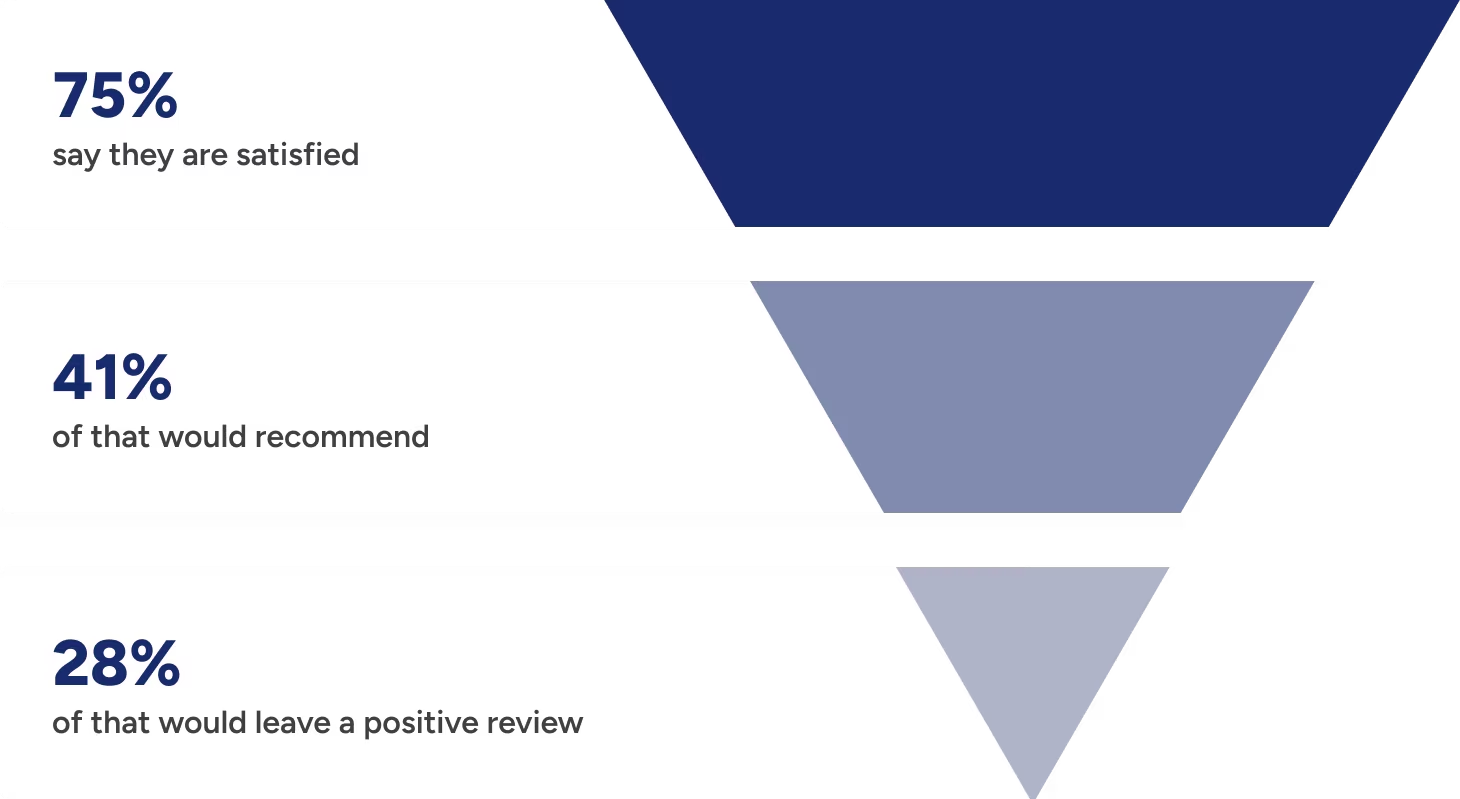
On the surface, satisfaction is strong. If you stopped there, you’d conclude everything was fine. But when we examine satisfaction alongside how clients describe their firm, a different picture comes into focus. Only 37% described their law firm as “caring.” This means a large share of clients would say, “They handled my case well,” but not, “They made me feel like I mattered.”
Satisfaction is a retrospective judgment about whether the firm was competent. That is, whether the matter was handled correctly and the client was treated appropriately. Even when clients rate their experience, they’re looking back and asking: Did they treat me appropriately? Were they polite? Was anything off? It’s a check on whether the experience met the basic standards every law firm (or professional services firm) should be held to.
“One way to show clients you care is by providing regular proactive case updates. It shows the client, ‘I recognize this matter is top of mind for you, and I want you to feel clear on where your case stands so you don’t have to wonder.”
.png)
Firms are investing in AI, but mostly to improve internal workflows, not the client experience.
AI may speed up documents and reduce team workload, but clients still wait for updates, answers, and reassurance. That’s why the Silent Majority stays silent.
The opportunity is to use technology to improve both operations and the client experience. Mobile app adoption has already grown from 12% to 32%, showing firms are starting to move in the right direction.

Client experience drives the hiring decision
Clients are in control of buying decisions today. They can easily compare firms through online reviews, ratings, and recommendations from a much wider network.
That means what clients say about your firm matters more than what your firm says about itself. Every interaction can shape whether someone chooses to reach out.
Attorneys estimate that 47% of their new clients already come through referrals. Imagine what that number could look like if firms redirected a portion of their marketing spend to systematically creating exceptional client experiences to generate recommendations, reviews, and referrals.
When it comes to reallocating marketing spend to align with how consumers buy today, the strategy is clear:
“I’m seeing and hearing more firms investing in client experience these days. It doesn’t seem like anyone thinks of these as marketing line items, but it makes so much sense when you see it laid out in front you. Client experience is driving people to your door by way of recommendations, reviews, and referrals. Of course it’s a marketing investment.”
.png)

How Future Firms Build Systems Around CX
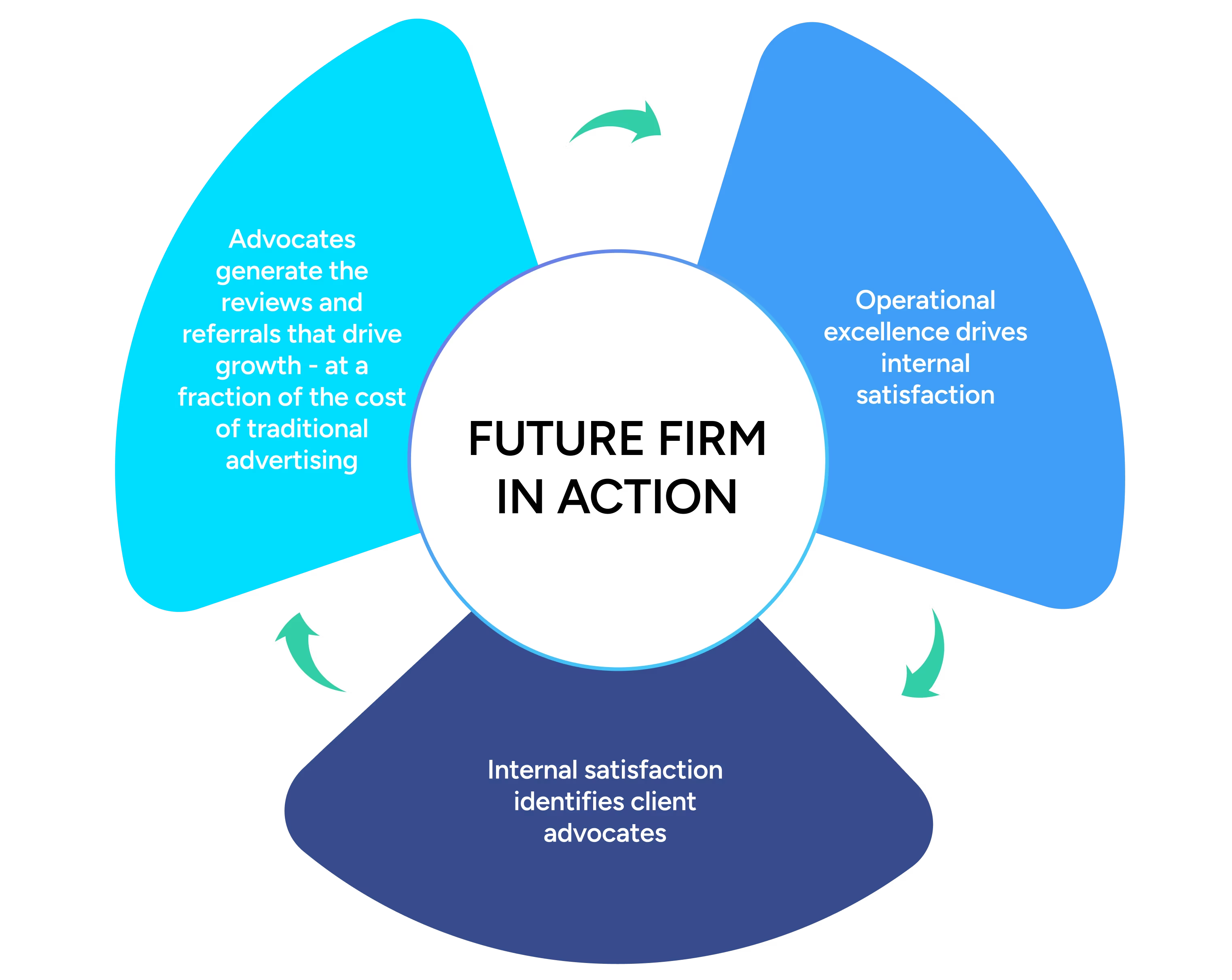
Operational investments in communication lead to stronger client satisfaction and higher Google review scores.
When firms respond faster, send proactive updates, and communicate consistently, clients are more likely to feel cared for and more likely to leave positive reviews.
Better client experience turns happy clients into firm advocates.
The three multipliers, app engagement, NPS measurement, and timing, don’t work in isolation. They compound. When a firm gets a client on the app, measures their satisfaction, and prompts them to leave a Google review at the right moment in their legal journey, the result is a weighted average star rating of 4.82 across nearly 6,500 reviews. Ninety-four percent of those reviews are five stars.

Legal Services’ Change Paradox
For Case Status’s second annual Legal Client Experience Report, we partnered with Researchscape to survey 430+ attorneys, law firm leaders, and legal clients across the U.S.
The report found that clients judge law firms by both outcomes and service. While legal outcomes are not always within a firm’s control, the client experience is.
The challenge is that many satisfied clients stay silent. In a market shaped by reviews and recommendations, firms need to turn good service into visible advocacy.
but firm still rely on communication channels from a former era.
Even though attorneys overwhelmingly believe clients want a modern, on‑demand experience and even though 93% say they’re willing to change how they operate, the day‑to‑day reality inside most firms looks much like it has since the late 1990s.
This contradiction between what attorneys believe and how firms operate is Legal Services’ Change Paradox.
Attorneys are thinking differently and moving in the right direction in terms of awareness and mindset. But firm operations remain anchored in old patterns that prevent them from delivering the modern experience they know clients expect and deserve —one that eliminates waiting and uncertainty in favor of clarity and confidence.
“Attorneys aren’t resisting change because they’re indifferent. They’re stuck because, without the right systems in place, good intentions default to old habits. Behavioral economists call this the intention–action gap: Humans gravitate toward the familiar, even when they know better.”
.png)
Attorneys consistently overestimate client satisfaction. While 98% of attorneys believe clients are highly satisfied with both service and legal outcomes, only 76% of clients say they’re highly satisfied with the experience, and 74% say the same about their outcome.
The gap comes from outdated, manual communication habits. Clients may be satisfied, but many don’t feel cared for enough to recommend or review their firm. This creates a cycle where firms spend on marketing instead of improving the client experience that actually drives referrals.
The report contrasts Fossil Firms with Future Firms. Fossil Firms rely on legal skill alone and reactive communication. Future Firms combine strong legal outcomes with connected client experiences through on-demand access, automated updates, and more meaningful human interaction.
Study Methodology
For Case Status's second annual Legal Client Experience report, we partnered with Researchscape, an independent market research firm, to survey over 230 practicing attorneys and law firm executives and over 1,000 U.S. consumers. After qualifying filters, 430+ responses were used in this analysis.
The report is based on a February 2026 online survey of 237 U.S. lawyers and law firm executives, conducted by Researchscape. Findings were reported only when they showed meaningful differences, including statistical significance at a 95% confidence level and at least a 10-point gap between groups.